

2026 Moving Timelines Explained: What Actually Determines Your Moving Day Duration

“How long is this move going to take?” is the question that decides everything: when you book the elevator, how much you’ll pay if movers bill hourly, whether you can make key pick-up, and how late you’ll be eating pizza on the floor of your new place.
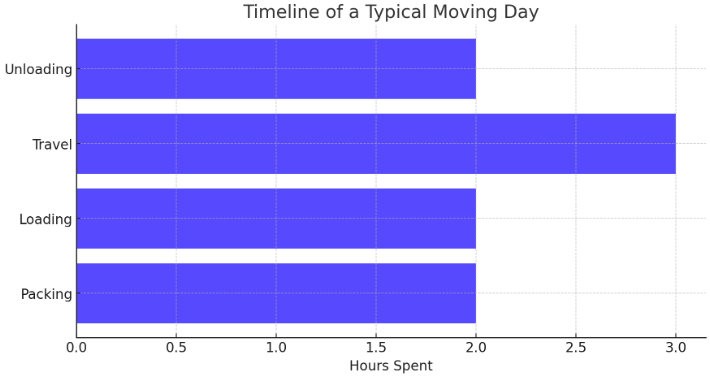
The honest answer in 2026 is still: it depends. But you can estimate moving time accurately by breaking the day into predictable stages (pack, load, drive, unload, reassemble) and accounting for the “time thieves” that slow moves down (stairs, long carries, parking, fragile items, and building rules).
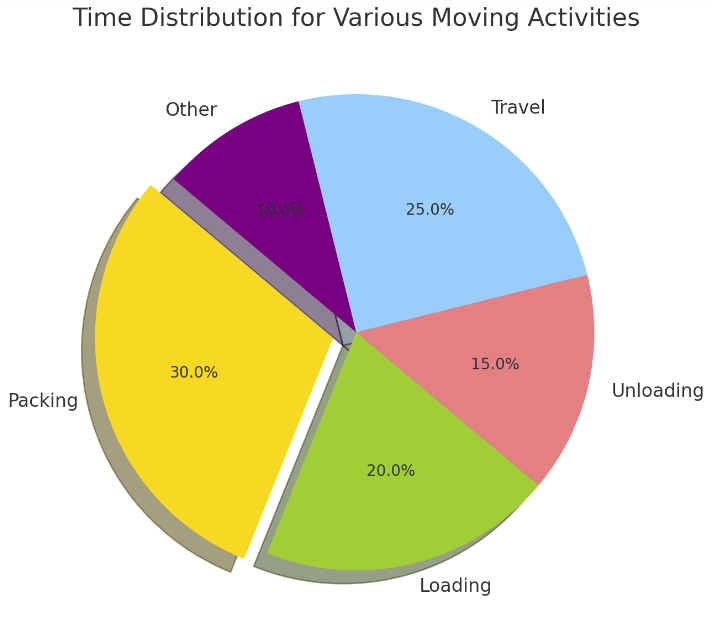
Quick Answer: What “Moving Time” Usually Includes
- Preparation: final boxing, furniture protection, disassembly
- Loading: carrying items, staging, truck packing (tight and safe)
- Drive time: distance + traffic + parking/approach at both addresses
- Unloading: placing items by room, reassembly basics
- Wrap-up: walkthrough, paperwork, payment, notes on any issues
If you’re hiring professional movers, ask how they bill (hourly vs. flat rate), whether double drive time applies, and what access conditions they assume (stairs, elevator reservations, parking distance, etc.). Those details change the timeline more than people expect.
The Most Accurate Way to Estimate Your Move
Instead of guessing one big number, estimate each stage and add buffers. Here’s a practical “real-world” approach that works for local and long-distance moves:
- Inventory your big items: beds, dressers, dining table, sectional, appliances, gym equipment.
- Count the “standard” boxes: small/medium/large. (A “box-heavy” home takes longer than it looks.)
- Check access at both addresses: stairs, elevator size, elevator booking window, long hallway, tight turns, loading dock rules.
- Factor special handling: artwork, TVs, computers, mirrors, glass, antiques, instruments, safes.
- Add drive logistics: parking permits, truck distance to door, traffic patterns, and any building check-in.
- Add a buffer: 10–25% is reasonable for “normal surprises.”
If you’re unsure about packing volume, professional packing (or partial packing) can change both the speed and the risk profile. If you’re handling fragile kitchen items, see how to pack dishes for moving so you don’t lose time redoing boxes mid-move.
2026 Time Estimates by Home Size (Local Moves)
The ranges below assume a reasonably prepared home (most items boxed, clear paths, elevator reserved if needed) and a standard moving crew. If you’re not packed or access is difficult, expect to land on the high end.
| Home Size | Packing (partial/none) | Loading | Unloading | Typical Total (local) |
|---|---|---|---|---|
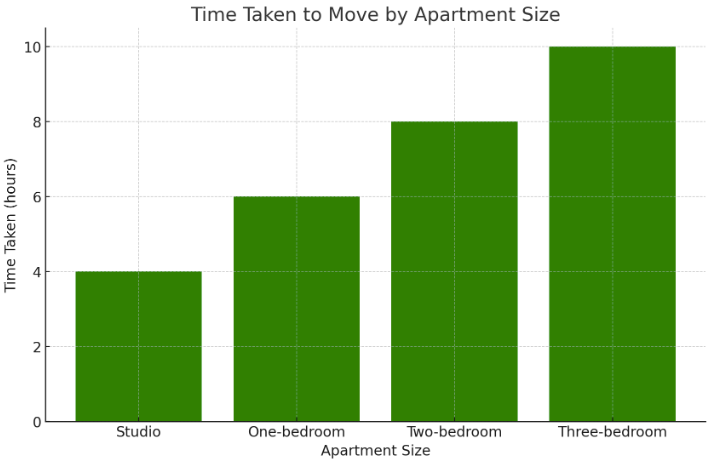
| Studio / 1BR | 1–3 hrs | 1–2 hrs | 1–2 hrs | 3–6 hrs |
| 2BR | 2–5 hrs | 2–4 hrs | 2–4 hrs | 6–10 hrs |
| 3–4BR | 4–8 hrs | 3–6 hrs | 3–6 hrs | 10–16 hrs (often a full day) |
| 5BR+ / large homes | 6–12+ hrs | 5–10 hrs | 5–10 hrs | 16–24+ hrs (often 2 days) |
Important: Crew size matters. Two movers vs. three movers can change a timeline dramatically, especially with stairs and heavy furniture. And furniture disassembly (beds, large tables) adds time—but it often prevents damage and speeds up the carry.
What Can Add (or Save) Hours on Moving Day
Most delays come from the same repeat offenders. If you fix these before the truck arrives, your move usually feels “fast” even when it’s a lot of work.
| Factor | Why it affects time | How to reduce delays |
|---|---|---|
| Stairs / no elevator | More trips, slower carries, higher fatigue | Reserve elevator when possible, stage boxes near exit |
| Long carry (truck far from door) | Every item travels farther | Secure close parking; ask about permits/loading zones |
| Not packed / “we’ll pack while you load” | Movers pause to wait for boxes | Finish boxing before crew arrives or book packing help |
| Furniture disassembly | Extra steps, hardware handling | Set aside tools/manuals; keep screws in labeled bags |
| Fragile items (kitchen, glass, TVs) | Requires protection and careful loading | Use paper/padding; pre-pack fragile zones the night before |
| Building rules / COI / move-in windows | Waiting time can stop work completely | Confirm rules early; if needed, learn how to get a COI for moving |
| Weather | Safety precautions slow carries | Prep floor protection; review how to prepare for movers to pack in bad weather |
| Traffic / route complexity | Drive time expands and affects delivery windows | Avoid peak hours when possible; plan alternate routes |
Local vs. Long-Distance: Why Long Moves Feel “Slower”
Local moves are usually “same-day”: load, drive, unload. Long-distance moves add extra layers: weight tickets, route planning, rest rules for drivers (if applicable), overnight storage, and a delivery window (sometimes called a delivery spread). Even if loading only takes one day, delivery might happen days later depending on the schedule and route density.
If you’re moving far, plan for:
- Pickup day(s): packing/loading + inventory documentation
- Transit time: distance, weather, traffic, routing
- Delivery appointment: building access + parking + elevator
- Unpack priority: set up beds, essentials, kitchen basics first
For cross-country planning ideas, see coast-to-coast movers. Even if you’re not booking that service, the planning considerations still apply.
Moving-Day Checklist That Saves Time
- Finish boxing before the crew arrives (or clearly separate “pack-me” areas).
- Label by room + priority (e.g., “Kitchen – Open First”).
- Create a “Do Not Load” zone for personal bags, documents, and valuables.
- Clear pathways and protect floors if it’s wet or muddy outside.
- Set aside hardware (bed bolts, TV mount screws) in labeled bags.
- Confirm parking at both addresses (and building check-in rules).
Need help keeping heavy pieces safe and efficient? Tools like dollies and straps matter more than most people think. Here’s a quick primer: what is a dolly for moving and how to use moving straps.
Conclusion: How Long Does It Take to Move?
There’s no single universal number—but there is a reliable way to estimate: break the move into stages, evaluate access and volume honestly, and build in a buffer for real-life friction (stairs, parking, fragile items, weather, and building rules).
If you want the fastest moving day, the winning combo is simple: be packed (or book packing help), make access easy, and communicate special items in advance. For budgeting and planning, you may also want to read Moving Costs: How Much Does it Cost to Hire Movers? and What Do Most Movers Charge Per Hour?.
Frequently Asked Questions (FAQs)
1) How long does it take to pack up a studio apartment?
If most items are already organized, many studios can be packed in 1–3 hours. Kitchens, books, and lots of décor can push that higher. The fastest moves usually happen when boxes are staged and labeled before movers arrive.
2) How long does pack up and move an apartment take?
For local moves, a common range is 3–6 hours for a studio/1BR and 6–10 hours for a 2BR—assuming normal access and minimal delays. Stairs, long carries, and last-minute packing are the biggest schedule breakers.
3) How long does a move take for a one-bedroom?
Many 1BR local moves land around 4–7 hours when you include packing touch-ups, loading, drive time, and unloading. Add extra time if you have a complex bed frame, lots of fragile items, or tricky parking.
4) How many days does it take to move?
Most local moves can be completed in one day. Large homes often work better as a two-day plan (especially if packing is included). Long-distance moves may involve a pickup day and a delivery window days later.
5) How much do you tip movers in 2026?
Tipping is optional, but common when the crew is careful, efficient, and professional. Many people tip per mover (hourly or as a flat amount) based on difficulty (stairs, long carry, heavy items) and overall service. If you prefer a non-cash “thank you,” providing water and quick snacks also goes a long way on a busy move.
6) Why does moving take so long sometimes?
Because tiny delays stack up: extra trips due to stairs, waiting on elevators, parking far from the entrance, dealing with fragile packing, disassembling furniture, and navigating bad weather. Cutting the biggest delays (packing readiness + access) is the fastest way to shorten the day.
| Question | Short Answer |
|---|---|
| How long to pack a studio? | Usually 1–3 hours if organized |
| Time to pack and move an apartment? | Commonly 3–10 hours depending on size and access |
| Duration for a one-bedroom move? | Often 4–7 hours locally |
| How many days for the entire move? | Local: usually 1 day; big homes/packing: 2 days; long-distance: pickup + delivery window |
| What’s a good mover tip approach? | Optional; base it on difficulty and service quality |
| Why does it take so long? | Access, packing readiness, fragile items, disassembly, weather, and traffic |
Use these estimates as a planning tool, not a promise. The more you prepare (especially boxing, labeling, and access logistics), the closer your move will stay to the low end of the range.
 What to Pack First When Moving | Expert Tips by Qshark Moving
 How to Move a Home Gym Without Floor Damage (Treadmills, Peloton, Weights) | QShark
 Los Angeles Moving Truck Parking Guide: Permits, No-Parking Signs & Ticket-Proof Loading | QShark
 How to Pack Artwork for Moving | Qshark Moving Company
 How to Move a Pool Table | Qshark Moving Company