

How to Pack LEGO for Moving
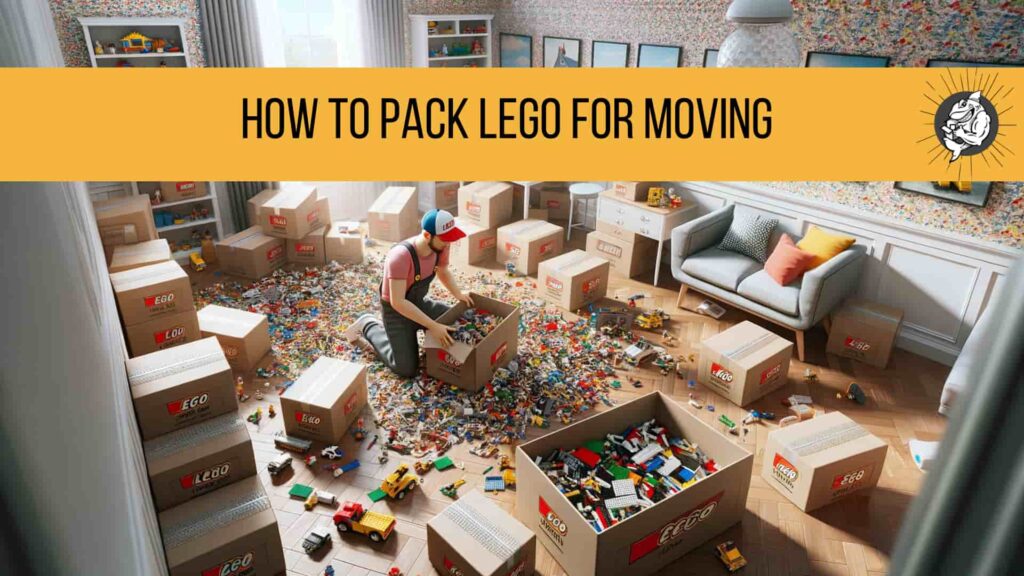
LEGO is easy to love and surprisingly easy to damage during a move. A finished build can lose dozens of tiny parts in one bumpy car ride. Loose bricks can spill and vanish into packing paper. Instruction manuals can bend, and minifig accessories can disappear forever.
The good news: you don’t need complicated tools to move LEGO safely. You just need a clear plan. In this guide, we’ll cover how to pack LEGO sets for moving (assembled, partially disassembled, or fully disassembled), how to protect minifigures and instruction books, which packing materials actually help, and how to unpack without turning your new home into a “brick minefield.”
If you want professionals who are used to fragile, detail-heavy items, Qshark Moving Company can help with careful packing and transport across California.
Understanding the LEGO Collection
Before you touch a roll of tape, take 10 minutes to sort your LEGO into categories. Packing strategy depends on three things: fragility, sentimental/collector value, and how fast you’ll want it ready after the move.
Assembled vs. Disassembled
Some sets travel best as bags of bricks. Others are display pieces you may want to keep intact. Many collectors land in the middle: “mostly assembled, but with fragile parts removed.”
- Assembled Sets: Great for display builds, but vulnerable to vibration and crushing. Best moved in rigid containers with zero movement inside.
- Disassembled Sets: The safest option for most builds. You eliminate snapping and stress points, and you’ll only rebuild once you’re settled.
Sentimental value, collector value, and “rebuild cost”
LEGO value isn’t just the price tag. It’s also time and emotion. A set you built with your kid, a rare retired kit, a custom MOC, or a UCS-scale model can feel irreplaceable. When deciding how careful to be, think in terms of:
- Time value: How long would it take to rebuild?
- Replacement difficulty: Can missing pieces be replaced easily, or are they rare/unique?
- Condition goals: Do you care about pristine stickers, manuals, box condition, and minifig accessories?
Pro mover tip: do a quick “movement test.” Gently lift an assembled model with two hands. If it flexes, rattles, or sheds parts, plan to partially disassemble or move it in a stabilized container.
Deciding What to Move
Moving is the best time to reduce clutter — even when the “clutter” is fun. If you have a large collection, deciding what to pack first can also reduce stress.
- High-value or hard-to-replace sets: Prioritize these for careful packing (and consider transporting them in your personal vehicle).
- Sets you love but don’t display: These are great candidates for full disassembly and bagging by set number.
- Broken builds and random bins: Decide whether you want to rebuild later or treat them as bulk pieces.
What to Do with Sets You Don’t Move
If a set hasn’t been touched in years, it might be worth converting it into space and cash — especially before paying movers to relocate it.
- Sell: Complete sets (with manuals and minifigs) usually hold value better than mixed bulk lots.
- Gift: Great for kids in the family or friends who enjoy building.
- Donate: Consider schools, community centers, or charities that accept toys in good condition.
Need help decluttering? Our guide on how to pack garden tools for moving covers the same “keep / donate / sell” mindset that works well for LEGO too.
Now let’s get into the actual packing workflows — starting with the most common approach: moving sets disassembled.
Packing Disassembled LEGO Sets
Why Disassemble?
Disassembling is the safest method for most LEGO sets. It prevents stress fractures and snapping, eliminates “rubbing damage” in transit, and makes it almost impossible for a big model to get crushed. It also keeps your move cleaner — no loose pieces rolling out of boxes when you open them.
If your set has rare minifigs, lots of small greebles, or tall structures (towers, masts, antennas), disassembly is usually the smartest choice.
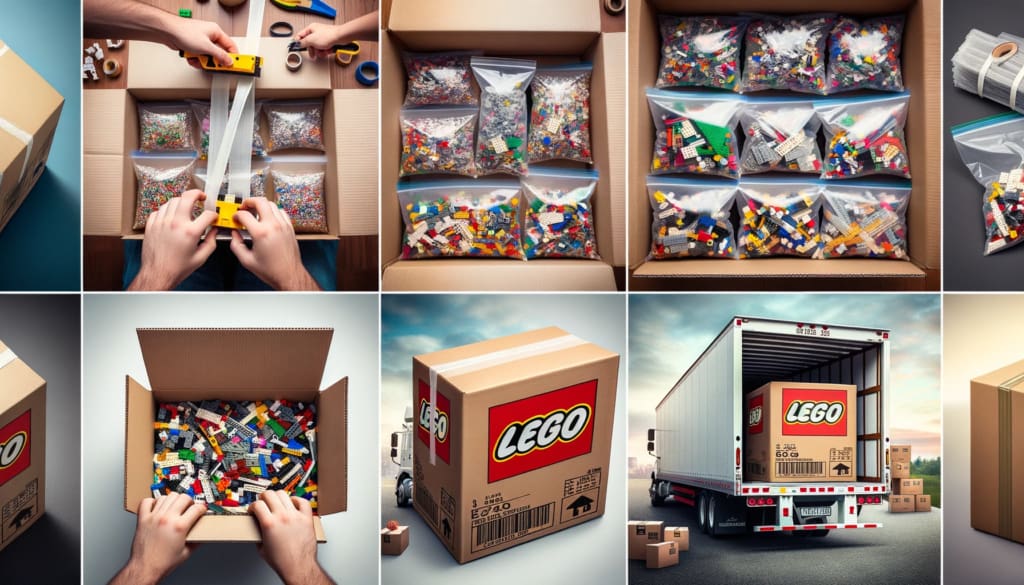
Step-by-Step Guide to Packing Disassembled LEGO Sets
The key is to pack like you plan to rebuild. That means: bag by set number, protect small parts, and label clearly.
- Take photos before you disassemble. Snap a few angles of the finished set (and the minifigs). Photos are your fast “rebuild reference.”
- Choose your disassembly level. You can fully disassemble, or remove major sections (floors of modular buildings, wings, roofs, towers) to save rebuild time.
- Bag the set in stages. Use one large bag for the set, then smaller bags inside for minifigs, accessories, and fragile/special parts.
- Label bags with the set number and notes. Example: “Set 102xx — minifigs inside — stickers/manual separate.” Use a permanent marker.
- Protect instructions and sticker sheets. Put manuals in a folder or a large zip bag with a piece of cardboard behind them so they stay flat.
- Use rigid containers for transport. Place labeled bags into clear lidded bins or sturdy boxes. Clear bins are great because you can find sets quickly after the move.
- Add light cushioning, not “piece-swallowing” fill. Soft packing paper between layers helps. Avoid loose packing peanuts around open bags — they can hide pieces if a bag opens.
- Seal and mark the container. “LEGO — DISASSEMBLED — KEEP DRY.” If manuals are inside, note that too.
Important: It’s tempting to sort by color. That’s fine for bulk bricks, but for sets you want to rebuild, sorting by color usually slows you down and increases the chance of pieces migrating between bags.
Table: Packing Supplies for Disassembled Sets
| Item | Suggested Quantity | Why Needed |
|---|---|---|
| Zip bags (snack/quart/gallon) | 20+ | Separate sets, minifigs, and small parts |
| Soft packing paper or clean towels | 10–20 sheets | Light cushioning between bags and layers |
| Packing tape | 2 rolls | Seal boxes/bins and secure labels |
| Clear lidded bins (optional but ideal) | 2–6 bins | Prevents crushing and makes sets easy to find later |
| Permanent marker / labels | 1–2 | Fast identification during unpacking |
Packing Assembled LEGO Sets
The Challenge
Assembled LEGO sets aren’t “fragile” like glass — but they are vulnerable to vibration, twisting, and weight. Most damage happens when a model slides inside a box, or when protruding parts (antennas, fences, trees, mirrors, fins, railings) catch on packing material and snap off.
If you want to keep a set assembled, the mission is simple: prevent movement and protect weak points.
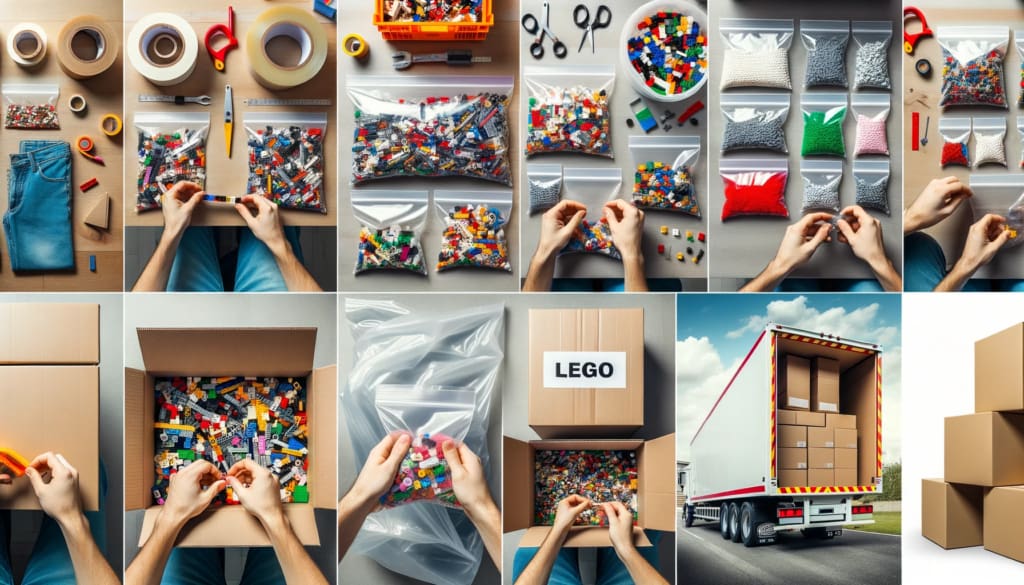
Step-by-Step Guide to Packing Assembled LEGO Sets
This method works well for modular buildings, display vehicles, and large builds you don’t want to rebuild from scratch.
- Dust the set. Use a soft paintbrush or makeup brush. Dust inside wrap can grind against parts.
- Photograph builds (close-ups too). Take photos from multiple angles so you can restore details if a section shifts.
- Remove fragile parts and bag them. Anything thin, tall, or easily snagged should come off: antennas, lamps, flags, loose roof modules, trees, minifig accessories.
- Stabilize with plastic film (stretch wrap). Wrap gently. You want the model held together, not crushed. Two to four passes is usually enough for medium builds.
- Add selective bubble wrap. Focus on corners and protruding areas. Avoid stuffing bubble wrap into delicate details.
- Choose the right box size. Use a sturdy box that leaves 2–3 inches of space around the model for padding. Office paper boxes work well for many sets because they’re rigid and stackable.
- Create a “nest” so nothing moves. Put soft packing paper/towels at the bottom, place the model, then fill empty space around it. The model should not slide when you gently shake the box.
- Seal and label clearly. Mark: “FRAGILE — LEGO — THIS SIDE UP.” Also write “Do not stack heavy items.”
- Load smart. LEGO boxes belong on top of heavier boxes, not under them. Keep them away from the truck door where they can shift.
- Consider professional handling for large collections. If you want less stress, use a moving company experienced with fragile items. Qshark Moving Company serves San Francisco, Los Angeles, Orange County, San Diego, and Rancho Cucamonga.
Table: Packing Supplies for Assembled Sets
| Item | Suggested Quantity | Why Needed |
|---|---|---|
| Stretch wrap (plastic film) | 1–2 rolls | Holds the build together and prevents small parts from dropping |
| Bubble wrap | 1 roll | Extra protection for corners and protrusions |
| Sturdy boxes (paper boxes work great) | 2–6 boxes | Rigid shape reduces crushing and sliding |
| Soft paper / towels | As needed | Creates a “nest” so the build can’t move |
| Labels + marker | 1 set | Ensures the box is handled correctly |
Extra Tips for Moving LEGO Like a Pro
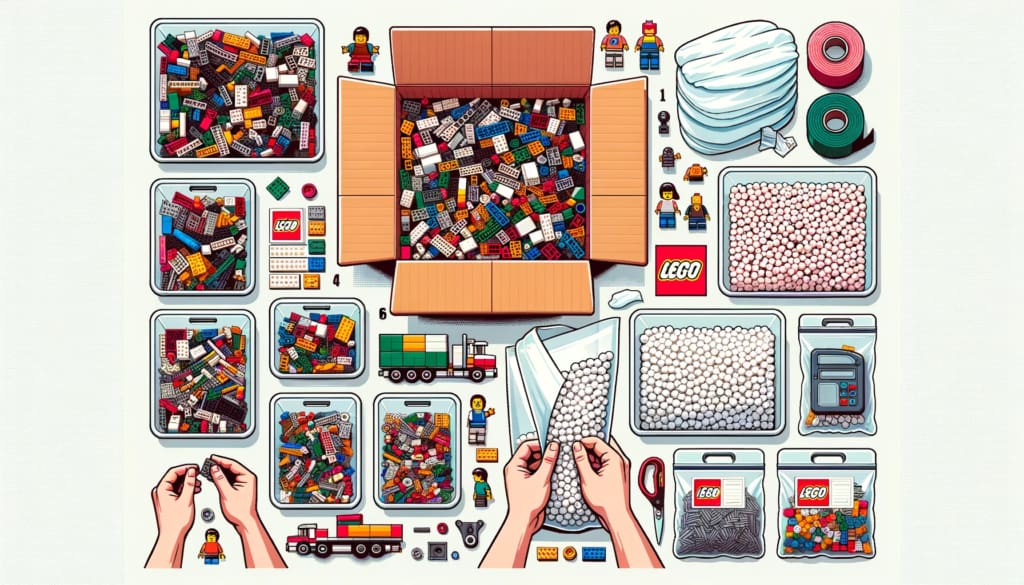
- Keep manuals flat: store them like documents, not “in a box with bricks.”
- Separate minifigs: use small bags or a parts organizer; accessories vanish easily.
- Watch heat: don’t leave LEGO in a hot car or direct sun for long periods (stickers and some elements can warp).
- Do a quick inventory check: for valuable sets, confirm all minifigs and unique parts are bagged before the moving day rush.
- Pack an “opening night” LEGO kit: one small set or a bin of favorite pieces to keep kids busy on move-in day.
Conclusion
Learning how to pack LEGO for moving isn’t about being overly careful — it’s about preventing the two things that ruin LEGO moves: lost pieces and uncontrolled movement in transit. Disassembled sets should be bagged and labeled by set number. Assembled builds need stabilization, selective padding, and a snug “nest” inside a rigid box or bin.
Remember:
- Label everything like you’ll unpack in a hurry (because you will).
- Keep manuals and minifigs protected and separate.
- Prevent movement inside every box — that’s the real secret.
Pack carefully, load smart, and you’ll arrive with your collection intact — ready to rebuild, display, and enjoy in your new home.
Frequently Asked Questions (FAQs) How To Pack LEGO for Moving
How do you pack LEGOs when moving?
For most sets, the safest method is to disassemble and pack pieces in labeled zip bags by set number, then place those bags in clear lidded bins or sturdy boxes. For display builds you want to keep assembled, stabilize with stretch wrap, pad corners, and pack the model so it cannot slide inside the box.
How do you transport LEGOs without them breaking?
Prevent movement. Pieces usually “break” because the model slides, twists, or vibrates in transit. Remove fragile parts, wrap the build to keep it together, and fill empty space so the set stays locked in place. For loose bricks, use sealed bags inside rigid bins to prevent spills.
How to pack LEGOs for moving, according to Reddit?
Common advice from LEGO fans online is to photograph builds before disassembly, bag pieces by set, and separate minifigs and accessories into smaller labeled bags. Many also recommend stretch wrap for assembled sets to keep small parts from dropping during the trip.
How do you organize assembled LEGOs?
Dust first, take reference photos, remove fragile parts, then stabilize the build with stretch wrap and selective padding. Place the set in a rigid box or bin with a soft “nest” around it so the model cannot shift. Label the container clearly so it stays upright.
Will LEGO start using paper bags?
LEGO has worked toward more sustainable packaging, including paper-based inner bags in some sets and regions. Packaging can vary by product line and production run, so you may still see plastic inner bags on many sets.
How do you separate and store LEGOs?
For sets you plan to rebuild, store by set number in labeled bags. For bulk bricks, store by category (plates, bricks, Technic, minifigs) or by color if that’s how you build. Use sealed bags inside clear lidded bins so pieces stay contained and easy to find.
Do moving companies specialize in moving LEGOs?
Some moving teams are comfortable handling fragile collections, including LEGO display builds. If you want professional help, Qshark Moving Company can pack and move LEGO alongside other delicate household items, with service across San Francisco, Los Angeles, Orange County, San Diego, and Rancho Cucamonga.
 What to Pack First When Moving | Expert Tips by Qshark Moving
 How to Move a Home Gym Without Floor Damage (Treadmills, Peloton, Weights) | QShark
 Los Angeles Moving Truck Parking Guide: Permits, No-Parking Signs & Ticket-Proof Loading | QShark
 How to Pack Artwork for Moving | Qshark Moving Company
 How to Move a Pool Table | Qshark Moving Company