
How to Pack Stuffed Animals for Moving: A Fluffy (But Practical) Guide
Introduction
Stuffed animals are “just toys” until it’s moving week and your child asks where Bunny is — right now — and Bunny is somewhere inside a mountain of boxes. Plush toys also collect dust, pet hair, and (sometimes) mystery crumbs, so tossing them into a random box can lead to odors, stains, or flattened fluff.
This guide shows how to pack stuffed animals for moving without drama, damage, or musty smells. We’ll cover sorting, cleaning, battery removal for electronic plushies, the best packing methods (including vacuum bags), and smart “moving-day” tricks that keep kids happy and your soft toys in great shape.
- Sort: keep / donate / trash (and let kids pick a “VIP” group).
- Clean & fully dry before packing to prevent odors and mildew.
- Remove batteries from talking/light-up plush toys, especially if storing.
- Choose the right container: bins for storage, boxes for moving, vacuum bags for short-term compression.
- Label clearly: “Kids Room — Stuffed Animals — OPEN FIRST.”
- Keep favorites with you (car or carry-on), not on the truck.
| Article Section | What you’ll do |
|---|---|
| Sorting Soft Toys | Declutter without tears, choose “VIP” plushies, and prep donations safely. |
| Battery Removal | Prevent leaks/corrosion in electronic toys and keep small parts organized. |
| Cleaning Tips | Pick the safest cleaning method and avoid clumped stuffing or melted fur. |
| Setting Aside Favorites | Pack a “moving-day plush kit” so comfort toys don’t disappear. |
| Packing Guidelines | Use boxes, bins, vacuum bags, or suitcases depending on time & storage needs. |
| Bonus Uses | Use plush toys as padding (the safe way) and store them without odors. |
| FAQ | Get clear answers about vacuum sealing, flying with plushies, and drying tips. |
Section 1: The Need for Sorting Soft Toys
Why sorting matters: Stuffed animals take up a surprising amount of volume. Sorting first means fewer boxes, faster loading, and less “Where is it?” panic when you arrive.
A simple system that works: Make three piles (or bins): Keep, Donate, Let Go. If your child is old enough, let them choose a small group of “VIP” plushies that will travel with you (more on that in Section 4). For everything else, you’re deciding between keeping for the new home or giving it a second life.
Donation note: Only donate plush toys that are clean, odor-free, and in good condition (no torn seams or exposed stuffing). Bag them in clean trash bags or large zipper bags to keep them fresh during drop-off.
🔗 For more on getting ready for moving day, check out How to prepare for movers to pack.
Section 2: Battery Removal
The Electric Elephant in the Room
If a stuffed animal talks, lights up, sings, or vibrates, it probably has a battery compartment. Batteries left inside for long periods can leak, corrode contacts, stain fabric, and ruin the toy — especially if it ends up in storage or a hot moving truck.
Step-by-Step Battery Extraction (Without Losing Screws)
- Turn the toy off (and remove any sound module if it’s detachable).
- Locate the battery compartment (often on the back, belly, or inside a Velcro pouch).
- Use the correct screwdriver (usually small Phillips) and open carefully.
- Remove batteries and place them in a small labeled bag: “BUNNY — AA x2”.
- Put the screws in the same bag (tape the bag to the toy tag if possible).
Pro tip: Snap a quick photo of the battery orientation before removing it. It saves time when you’re reassembling at the new place.
🔗 Wondering about general moving costs? Here’s What do most movers charge per hour.
Section 3: Cleaning Your Stuffed Animals
Spick and Span Before the Van
Cleaning isn’t about perfection — it’s about preventing musty smells, reducing dust/allergens, and making sure toys don’t go into boxes slightly damp (that’s how mildew happens). Always check the care label first. If there’s no label, use the gentlest method.
Table: Cleaning Methods for Stuffed Animals (What to Choose and Why)
| Method | Best for | Notes & watch-outs |
|---|---|---|
| Vacuum / lint roll | Quick refresh, pet hair, dust | Use a brush attachment and low suction; avoid pulling on glued-on eyes or loose seams. |
| Surface clean (mild soap) | Plushies with electronics or delicate details | Dampen a cloth (don’t soak), gently wipe, then air dry completely. |
| Machine wash (gentle) | Most standard plush toys without batteries | Use a pillowcase or laundry bag, cold water, gentle cycle. Air dry when possible. |
| Hand wash | Older toys, fragile fabric, glued parts | Spot clean stains, rinse thoroughly, squeeze gently (no wringing), and air dry fully. |
| Professional cleaning | Collectible plushies or sentimental “cannot-risk-it” toys | Ask about fabric safety and drying method; avoid high heat that can mat fur. |
🔗 Want to make your move greener? Here’s how to have an Eco-friendly move.
Section 4: Setting Aside Favorites
The VIP (Very Important Plushies)
For many kids, a favorite stuffed animal is emotional support in fur form — especially during a move. Don’t gamble by putting “the one” on the truck. Create a small moving-day plush kit and keep it with you.
- 1–3 favorite plushies (not the entire zoo)
- A small blanket or comfort item
- A zipper bag for tiny accessories (bows, collars, outfits)
- A label or tag with your phone number (especially if traveling)
🔗 Got moving questions? Get answers here.
Section 5: The Packing Process
Choose the Right Packing Method (Box, Bin, Vacuum Bag, or Suitcase)
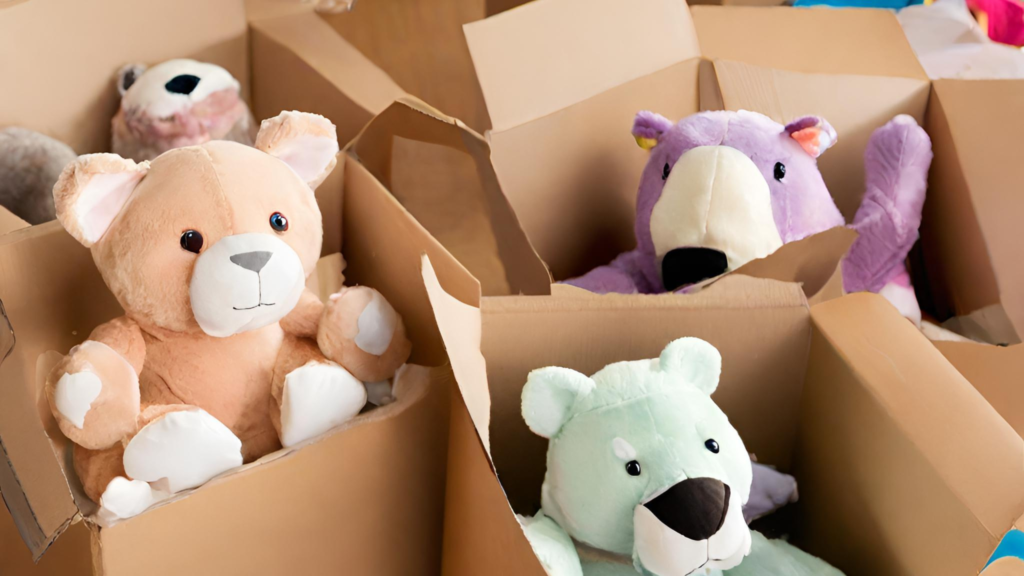
The “best” method depends on what you’re doing after the move. If the toys are going straight into a bedroom, boxes are fine. If you’re storing them for months, clear bins usually beat cardboard. Vacuum bags can be great, but only when used correctly (and not for long-term storage).
| Container | Best for | Pro tip |
|---|---|---|
| Cardboard boxes | Short moves, easy stacking, quick unpacking | Line with a clean trash bag if you’re worried about dust or light rain during loading. |
| Clear plastic bins (with lids) | Storage or multi-stage moves | Add a dryer sheet or small fabric sachet for freshness (avoid touching toys directly if sensitive skin). |
| Vacuum storage bags | Saving space in the car or short-term compression | Don’t keep compressed for months—re-fluff within a few weeks to help the stuffing recover. |
| Large trash bags | Fast packing of non-collectible plushies | Double-bag and tie loosely so you don’t crush faces/ears. Label the bag clearly. |
| Suitcase/duffel | Travel moves, “open first” items | Great for VIP plushies and bedtime toys—no box hunting on night one. |
Materials Needed for Packing
- Cardboard boxes or clear plastic bins
- Clean trash bags (as liners or quick packing)
- Packing tape
- Zipper bags (batteries, screws, accessories)
- Marker + labels (or painter’s tape for fast labeling)
Steps for Effective Packing (So They Arrive Clean and Fluffy)
- Make sure toys are clean and fully dry. Even slightly damp plush can develop a musty smell in sealed boxes.
- Remove batteries and loose parts. Bag and label small accessories so nothing gets lost.
- Pack by “use,” not just by room. Keep bedtime favorites together. Pack “display” or collectible plushies separately.
- Don’t overstuff boxes. Crushing plush toys can permanently flatten faces and bend plastic eyes.
- Label clearly. Example: “Kids Room — Stuffed Animals — OPEN FIRST.”
- Keep VIP plushies with you. Car, carry-on, or personal suitcase beats “somewhere on the truck.”
🔗 For tips on protecting breakables, visit How to pack fragile items.
Bonus Section: Other Uses for Stuffed Animals in Moving
Double Duty (Without Making a Mess)
Yes, stuffed animals can help protect items in boxes — but use them smartly. If you’re using plush toys as padding, put them in a clean bag first. That way, they don’t pick up dust from cardboard or rub against sharp edges.
- Use as soft padding around lightweight, non-fragile items (plastic toys, pillows, blankets).
- Avoid direct contact with glass or liquids. A leaked bottle + plush fur = a bad day.
- Long-term storage tip: bins beat cardboard in basements/garages. Add a small moisture absorber if humidity is a concern.
- Labeling tip: if it’s a comfort toy, write “OPEN FIRST” so it doesn’t vanish for a week.
🔗 For DIY moving tips, check out Do-it-yourself moving.
Conclusion: How to Pack Stuffed Animals for Moving
If you sort first, clean properly, remove batteries, and pack with a plan, your stuffed animals will arrive ready for the new home — not flattened, musty, or missing an ear. The biggest win is keeping a few favorites accessible so your child feels settled faster (which makes moving day smoother for everyone).
🔗 Lastly, don’t forget to set up your utilities after moving.
So, whether you’re moving within San Diego, between Los Angeles and Costa Mesa, or heading to Orange County, you’re ready to move those plushies like a pro.
Frequently Asked Questions: The Fuzzy Details
1. Can you vacuum-pack stuffed animals?
Yes — and it’s one of the fastest ways to save space in a car. Use vacuum bags for short-term compression, not long-term storage. To protect shape, don’t over-compress “face” plushies and avoid sealing collectible toys for months. When you arrive, open the bag, shake the toy out, and give it time to re-fluff.
2. How do you travel with a large stuffed animal?
For car travel, buckle it in with a seatbelt or place it in a clean, breathable bag so it doesn’t get dirty. For flights, check airline rules. If it fits as a carry-on, it’s usually safer (and less likely to get squished) than checked luggage. If you must check it, use a durable bag and add a luggage tag.
3. How do you travel with a stuffed animal in general?
Keep small plushies in a backpack, tote, or carry-on. If the toy is a bedtime favorite, keep it accessible — not buried under snacks and chargers. A simple trick is a dedicated “plush pocket” so it always goes back to the same place.
4. Do you wrap stuffed animals?
Usually, no. Plush toys are soft and don’t need bubble wrap. The exception is collectible or delicate plush with fragile accessories. For those, use tissue paper or a clean cotton pillowcase. Avoid tight wrapping that can dent the stuffing or bend plastic details.
5. What happens when you vacuum seal stuffed animals?
Vacuum sealing compresses the toy and reduces volume dramatically. Short-term, it’s usually fine. Long-term, it can cause stubborn creases, flattened stuffing, or distorted shapes — especially for toys with firm noses, molded parts, or “structured” heads.
6. How do you vacuum seal stuffed animals at home?
Use a vacuum storage bag (the kind for bedding/clothes). Place the plush inside, seal the zipper fully, attach the vacuum hose to the valve, and remove air until compressed (not “brick hard”). Store the bag flat, away from sharp objects that could puncture it.
7. How do you carry big soft toys on a plane?
If it fits in the overhead bin or under the seat, carry-on is usually best. If it’s oversized, you may need to check it or treat it as an oversized item (rules vary). For extra protection, place it in a large duffel or durable bag with your contact info.
8. Can you machine-dry large stuffed animals?
It depends on the toy and the label. Heat can melt synthetic fur, warp glued parts, and clump stuffing. If you must machine dry, choose no heat / air fluff. In most cases, air drying is the safest option — just give it enough time so the inside dries fully.
9. How do you transport large items on a plane?
For oversized items, airlines typically treat them as checked or oversized baggage with extra fees. Measure ahead of time, check restrictions, and pack in a durable bag. If the plush has sentimental value, consider carry-on or shipping it with tracking and insurance.
10. How do you pack stuffed animals for long-term storage?
Use clean, dry toys only, then store them in lidded plastic bins (better than cardboard for basements/garages). Avoid vacuum bags for long-term storage if you care about shape. Keep bins off the floor if moisture is possible, and store away from direct heat and sunlight.
 What to Pack First When Moving | Expert Tips by Qshark Moving
 How to Move a Home Gym Without Floor Damage (Treadmills, Peloton, Weights) | QShark
 Los Angeles Moving Truck Parking Guide: Permits, No-Parking Signs & Ticket-Proof Loading | QShark
 How to Pack Artwork for Moving | Qshark Moving Company
 How to Move a Pool Table | Qshark Moving Company